


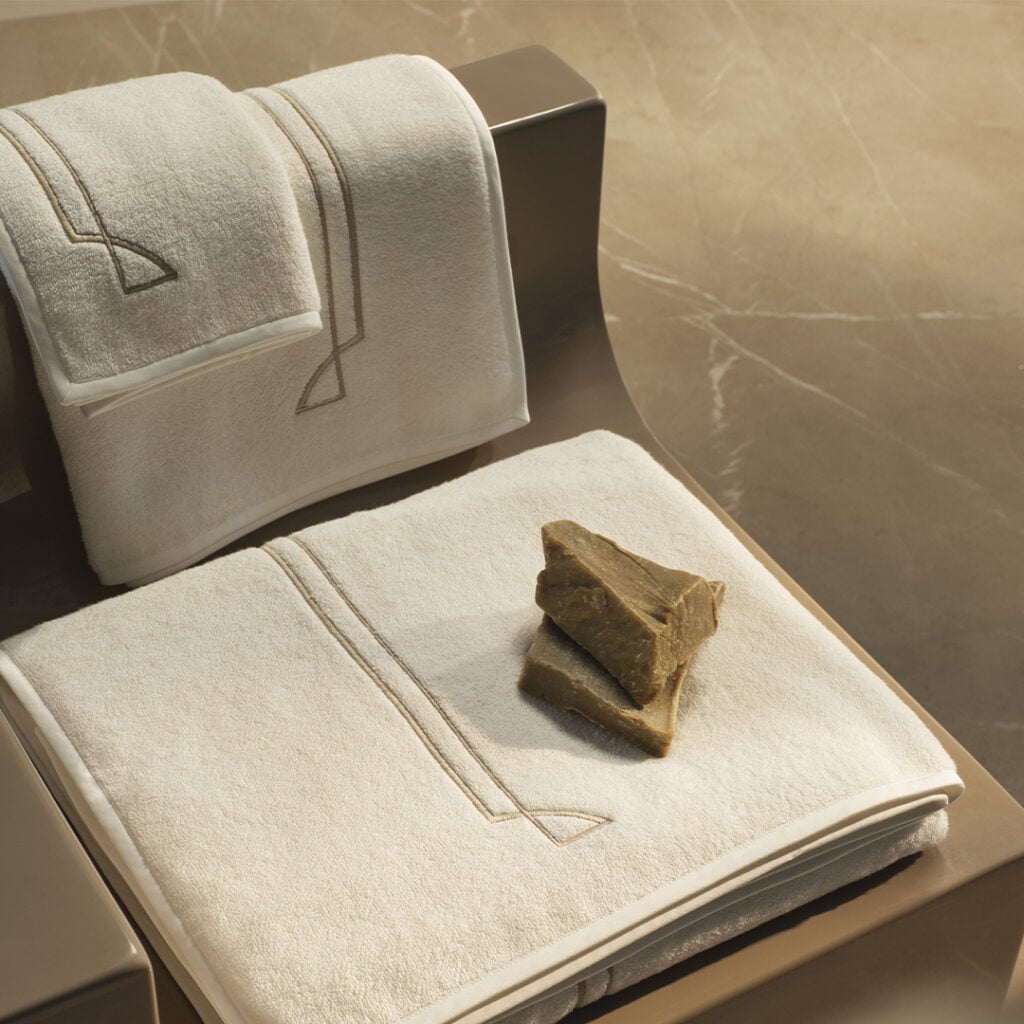
Bedding does more than cover a mattress. The weave of a fabric shapes how it feels against skin, how it breathes through the night, and how a bedroom looks in daylight. Frette US builds its collections around several distinct constructions, and understanding what separates percale from sateen, or jacquard from a silk blend, makes it easier to picture how each behaves on an actual bed. This look at luxury bedding fabrics walks through the core weaves the brand offers and what sets each one apart.
Understanding Frette’s Core Fabrics: Percale, Poplin, and Sateen
Frette US describes its bedding lineup as starting with crisp percale, lightweight poplin, and other signature constructions. Percale is woven in a simple over-under pattern, which gives it a matte finish and a cool, crisp hand. Poplin uses a tighter, fine-rib structure that reads as lightweight and smooth, suited to a less dense feel on the bed.
Sateen, by contrast, is woven so that more thread passes over the surface, producing a subtle sheen and a softer drape. These three constructions form the backbone of the brand’s sheet sets, duvet covers, and pillowcases. Choosing among them often comes down to whether a crisper or a silkier surface is preferred, since each delivers a noticeably different tactile result.
The Jacquard Advantage: Textured Weaves in Frette Collections
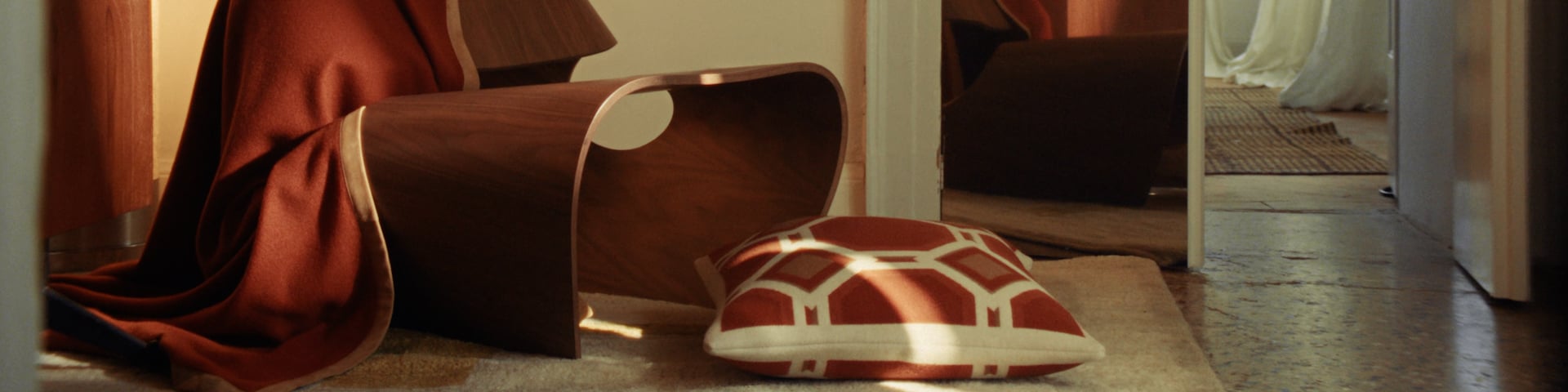

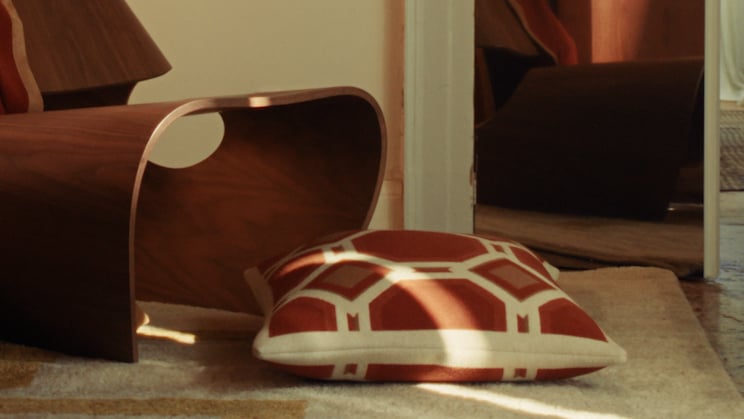
Jacquard fabric is woven on a loom capable of producing raised patterns directly in the cloth, rather than printing a design on top. Frette US highlights its jacquard offering as award-winning, and the brand’s newest collection, Design Reform, is built around structured jacquards paired with refined textures and seasonal tones. The result is bedding with dimension built into the fabric itself.
Because the pattern is woven rather than printed, jacquard pieces tend to carry a more architectural, formal look compared to a plain weave. This makes jacquard a natural choice for anyone drawn to a more decorative bedroom presentation. It sits apart from percale or poplin precisely because its visual interest comes from the structure of the weave.
Leisure Twill and Silk-Blend Constructions: Modern Luxury Textiles

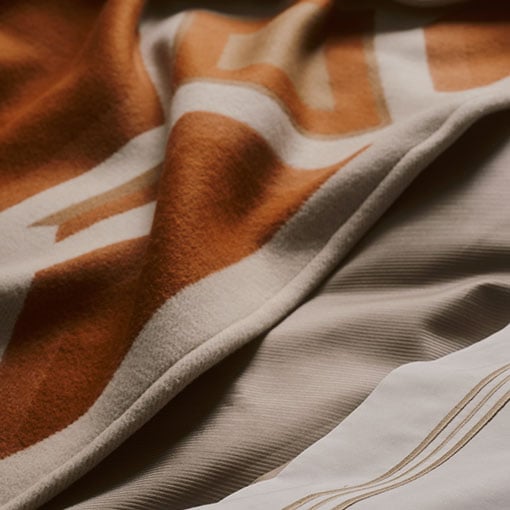
Among the more distinctive offerings from Frette US is Leisure Twill, crafted from the brand’s signature cotton, silk, and cashmere blend. Its twill weave is woven on a diagonal, which gives the fabric a visibly textured surface along with what the brand describes as exceptional softness. Leisure Twill is currently available in Milk and Grey Melange, both offered across pieces like the Leisure Twill Duvet Cover.
This three-fibre construction sets Leisure Twill apart from the brand’s single-fibre cotton weaves. Combining cotton with silk and cashmere changes both the tactile character and the way the fabric catches light. It represents a more layered approach to luxury bedding fabrics, where texture and fibre blending work together rather than relying on weave alone.
Specialty Materials: Linen, Cashmere, and Wool Options at Frette
Beyond the core cotton weaves, Frette US extends its range into throws, blankets, and decorative pieces that draw on additional materials. Cashmere appears within blended constructions such as Leisure Twill, while the brand’s broader home accessories and throw collections round out a range built for different parts of the bedroom and living space. Items like the Knop Throw sit alongside bedding to extend the same attention to fibre choice into other textiles around the home.
These specialty materials give the collection more range than cotton weaves alone could offer. A throw or blanket in a richer fibre blend can complement a sheet set without duplicating its texture. That variety is part of why the brand positions itself around fine linens as a whole, not sheets in isolation.
Sensory Differences: Crisp Versus Silky Feels Across Frette Lines


The clearest way to compare these constructions is by how they feel against skin. Percale sits at the crisp end of the spectrum, with a matte surface and a light, airy hand. Sateen moves toward a silkier, smoother feel thanks to its denser weave face, while jacquard adds raised texture that can feel more tactile depending on the pattern.
Poplin and Leisure Twill occupy their own middle ground, one leaning light and fine, the other textured through its diagonal weave and fibre blend. None of these is simply better than another since they are built for different sensations. The following points summarize how the main constructions differ in practice.
- Percale uses a plain over-under weave that produces a matte finish and a crisp, cool hand.
- Poplin is woven with a fine, tight rib that gives it a lightweight and smooth surface.
- Sateen has a denser weave face that creates a subtle sheen and a softer, silkier drape.
- Jacquard is woven with raised patterns built directly into the cloth rather than printed on top.
- Leisure Twill combines a cotton, silk, and cashmere blend with a diagonal twill weave for added texture.
Selecting by Season and Sleep Environment: Fabric Performance Across Climates
Frette US frames its range around different bedroom moods, including a Fall Edit built around refined bed linens as the seasons change. Structured jacquards and richer textures, like those in the Design Reform collection, suit cooler-weather styling, while crisp percale or lightweight poplin can carry a lighter, airier feel. These luxury bedding fabrics give a practical way to adjust a bedroom’s character through the year without changing the whole room.
Layering also plays a role, since a jacquard duvet cover or a Leisure Twill piece can sit over a percale or sateen sheet set beneath it. That pairing lets a crisp or silky base layer stay close to the skin while a heavier textured topper adds visual weight. The brand’s seasonal collections, including its Icons line reflecting decades of design heritage, are built around this kind of mixing across fabric types.
Closing Thought
Across percale, poplin, sateen, jacquard, and blended constructions like Leisure Twill, Frette US offers a genuinely varied vocabulary of weave and texture. Picking among them comes down to weighing crispness against sheen, and plain surfaces against woven pattern.