

Dyson is the rare consumer-tech company that made vacuum cleaners feel like sports cars and hair dryers feel like aerospace hardware. Its rise wasn’t powered by celebrity founders or trend-chasing marketing, but by a stubborn engineering mindset: find the annoying problem everyone has accepted, then refuse to accept it. That obsession—paired with distinctive industrial design—has turned unglamorous household appliances into premium, culture-defining objects.
TL;DR:
Dyson became a global icon by obsessively engineering better versions of boring everyday appliances. Founder Sir James Dyson spent five years and 5,127 prototypes creating the first successful bagless cyclone vacuum, proving the brand’s “problem → relentless prototyping → breakthrough” formula.
That same approach later reshaped fans and air purifiers (smooth, bladeless airflow) and even beauty tech like the Supersonic and Airwrap, turning utilitarian tools into premium, design-led status products.
In 2025–26 Dyson is still iterating hard, rolling out its biggest lineup refresh yet—new ultra-slim and high-suction vacuums, wet-dry cleaners, compact purifiers, and AI robot vacuums that detect stains and adapt cleaning automatically.
The origin story: frustration, cyclones, and 5,127 prototypes
Dyson begins with Sir James Dyson, a British inventor who got annoyed with a simple household truth in the late 1970s: traditional vacuum cleaners lost suction as their bags clogged. Instead of accepting it, he studied industrial cyclone systems used in sawmills to separate dust from air, then rebuilt his Hoover with a crude cyclone chamber. It worked.
What followed became Dyson folklore: 5 years and 5,127 prototypes later, he produced the DC01, the world’s first commercially successful bagless vacuum.
The lesson that defined the brand was set early:
- iterative prototyping beats theory,
- engineering solves what marketing cannot,
- and failure is part of invention.
Disruption #1: the bagless vacuum era
When Dyson vacuums hit the market in the 1990s, they didn’t just enter a category—they rewrote it. Bagless cyclonic separation meant:
- suction didn’t fade,
- filters stayed cleaner longer,
- and maintenance was simpler.
Dyson’s vacuums also looked like nothing else: clear bins showing dirt swirling inside, bright colors, and visible tech. That transparency became symbolic: this machine is powerful enough to show you what it’s doing.
Competitors eventually copied the technology, but Dyson had already secured its reputation as “the company that engineers the obvious upgrade.”
Engineering as a business model

Dyson’s disruption isn’t product-by-product luck. It’s structural. The company invests heavily in R&D—public sources and Dyson statements highlight multi-billion-pound investment plans to expand its portfolio and develop new technologies.
The internal loop looks like this:
- Spot a friction in daily life (clogging bags, loud fans, heat damage to hair).
- Engineer a non-obvious fix, often borrowing from industrial or scientific tech.
- Prototype relentlessly until performance is undeniable.
- Turn the engineering into the story.
In Dyson’s world, marketing isn’t the core engine—it’s the megaphone for engineering.
Disruption #2: air without blades
After vacuums, Dyson applied its obsessive logic to fans. Regular fans were noisy, choppy, and hard to clean. Dyson’s solution was the Air Multiplier: a bladeless-looking ring that amplifies airflow smoothly using hidden impellers and aerodynamic shaping.
The fan became an icon not just because of performance, but because Dyson made air feel designed. People bought it like they were buying a piece of modern furniture.
That philosophy later expanded into heaters and air purifiers, where Dyson added sensors, filters, and app connectivity to make air care measurable, not mysterious.
Disruption #3: haircare as high technology
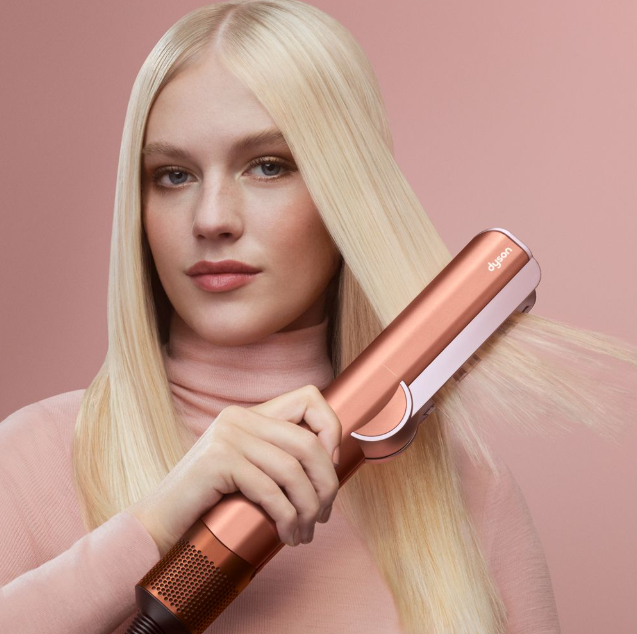
Dyson’s entry into beauty surprised people—until they saw the pattern. Hair dryers were loud, heat-damaging, and basically unchanged for decades. Dyson used:
- miniaturized, high-speed motors,
- airflow engineering,
- and temperature control
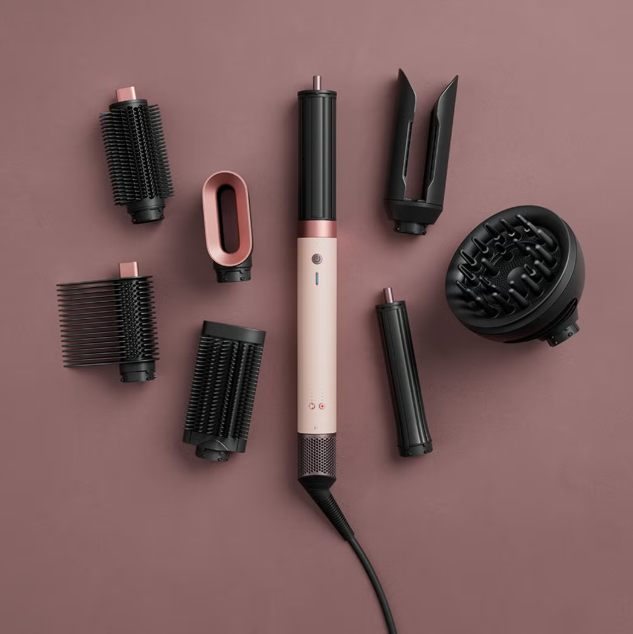
to create the Supersonic hair dryer, then the Airwrap and Corrale.
In 2024–2025, Dyson doubled down by reinventing its hair tools again (like the Supersonic r) and launching its own hair formulations such as the Dyson Chitosan range, and later new pre-styling products.
This was disruption in a new category using the same old method:
take a stagnant product, apply precision engineering, and make it feel future-grade.
The premium myth: why people pay Dyson prices
Dyson products cost more, and the company is unapologetic about it. The premium isn’t framed as luxury for its own sake; it’s framed as performance you can feel immediately.
Dyson reinforces premium in three ways:
- Performance proof (suction numbers, heat sensors, AI navigation).
- Industrial design that looks engineered, not decorative.
- Retail experiences where customers can test devices hands-on.
The result is emotional: consumers don’t just buy a vacuum—they buy the feeling of a better system.
2025–2026: still disrupting in new forms
Recent launches show Dyson staying true to its DNA while pushing into newer formats:
- A wave of new floor-care products revealed at IFA Berlin, including updated stick vacuums and wet-dry cleaners.
- New robotics like the Spot+Scrub AI robot vacuum, using cameras and object recognition to detect stains and navigate intelligently.
- More compact, quieter air purifiers (e.g., the HushJet Purifier Compact).
- Continued expansion in beauty via hair oils and pre-styling products rooted in Dyson’s own hair-science pipeline.
Even amid global competition, Dyson reports record product volumes in 2024 and signals more launches than ever through 2025.
What Dyson really sells
Underneath the cyclones, rings, and motors, Dyson sells a worldview:
- Nothing is “good enough” just because it’s familiar.
- Everyday life deserves elite engineering.
- Design should reveal function, not hide it.
That’s why Dyson appliances become icons. They feel like proof that ordinary things can be re-imagined—and that someone cared enough to try 5,127 times.
Conclusion
Dyson disrupted multiple categories by treating household problems as engineering challenges worthy of obsession. From the first bagless vacuum to bladeless airflow, intelligent air care, and high-tech hair tools, Dyson’s signature has stayed consistent: relentless prototyping, visible performance, and design that makes technology feel personal. In doing so, it turned appliances we used to tolerate into products people genuinely desire—and made engineering itself the brand.